News
Colorado: flat income tax ends as voters approve graduated rates from 2027
Colorado voters approved Amendment 87 on 3 November 2026, replacing the state flat 4.4% income tax with six graduated rates from 3.7% to 8.4% for tax years from 1 January 2027. The result is unofficial until county canvass boards certify by 25 November 2026.
By Bikram LamaPublished 4 min read
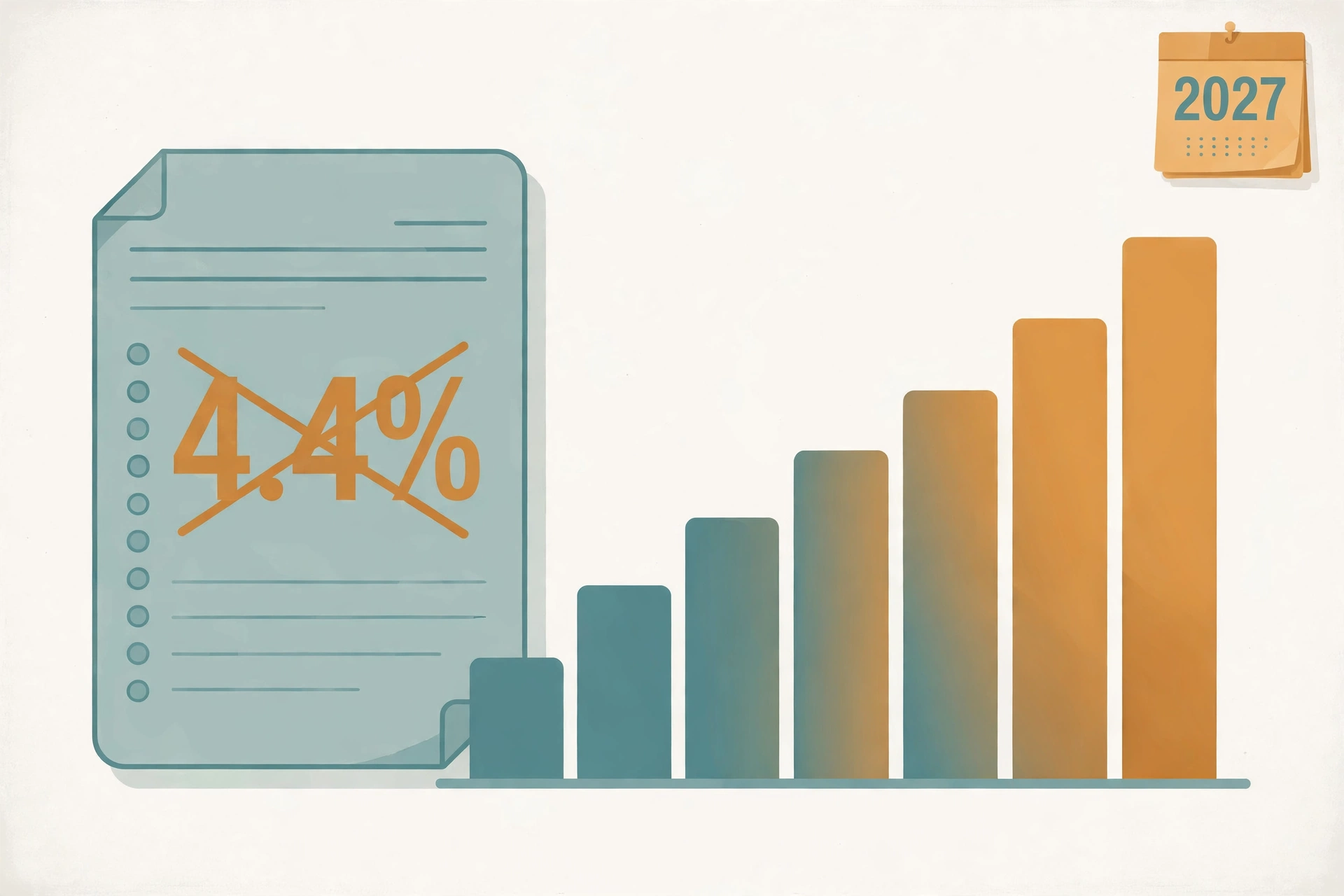
Colorado voters have approved Amendment 87, replacing the state's flat income tax with a graduated system. The change applies to tax years beginning on or after 1 January 2027, with the first returns under the new rates filed in 2028.
The Associated Press called the result approved at 10:49 a.m. MST on Friday 6 November 2026, and opponents conceded the same morning, but the result is not yet final. County canvass boards must certify the vote on or before 25 November 2026, and military and overseas ballots are accepted through 12 November. The latest count from the Secretary of State, as reported on 7 November, put Yes at 1,354,374 votes (51.62%) and No at 1,269,187, a margin of 85,187 votes. Bloomberg Law and Rocky Mountain Voice reported the call and the count.
What happened
Amendment 87 reached the ballot as a citizen initiative, Initiative 195. It repeals the requirement in the Taxpayer's Bill of Rights that all taxable net income be taxed at one rate, and replaces the flat state income tax with six graduated brackets. The rate then depends on how much taxable income a person has.
The measure needed only a simple majority, because its only constitutional change deletes the single-rate requirement rather than adding new language. The other six constitutional amendments on the ballot needed 55%. A Denver District Court judge had rejected a challenge to the measure's petition signatures in October 2026. Rocky Mountain Voice reported the concession.
Who it affects, and by how much
The change affects everyone who pays Colorado state income tax. Colorado has taxed every dollar of income at a single rate since 1987, most recently 4.4%, and from the 2027 tax year a graduated tax charges higher rates only on income above each threshold. According to the Blue Book, the state's official voter guide, the change decreases the amount of income tax owed by taxpayers with Colorado taxable income below $510,834, and increases it at $510,834 and above.
The new rates, from the Blue Book's table:
| Taxable income | Rate |
|---|---|
| $25,000 or less | 3.7% |
| $25,001 to $100,000 | 4.2% |
| $100,001 to $500,000 | 4.4% |
| $500,001 to $750,000 | 7.4% |
| $750,001 to $1,000,000 | 7.9% |
| More than $1,000,000 | 8.4% |
The Blue Book works through what that means in practice. A taxpayer with $125,000 of taxable income would owe $5,175 under the new rates, $325 less than the $5,500 owed now, and for taxable incomes under $500,000 the tax falls by up to $325 a year. Above that line it rises: $550,000 of taxable income would owe $25,375, $1,175 more than now, and $2,000,000 would owe $143,925, $55,925 more. One point the Blue Book flags is that the new brackets are not adjusted for inflation, so more of a taxpayer's income falls into the higher brackets over time.
Voters also rejected Proposition 136, which would have capped the income tax rate at 4.4%, so no conflict between the two measures arises. The Coloradoan reported both results.
How much money it raises
The ballot title states taxes rise by up to $2.7 billion a year, the maximum estimate for the first full fiscal year. The Blue Book's central estimate is about $958 million in the 2026-27 budget year, a half year, and about $1.97 billion in 2027-28. The added revenue goes to K-12 public education, health care, and early childhood care and education, and the measure says it must add to, not replace, spending on those services. The state expects to collect $15 billion in income tax in 2028 under the old rate and $17 billion under the new one, and the Blue Book says current TABOR refunds are unchanged. Blue Book copy
What happens next
The Colorado Department of Revenue told Colorado Public Radio it will change income tax and withholding forms and update its processing systems, with most changes taking effect in spring 2027 ahead of the 2027 tax year. Nothing changes for the 2026 tax year. The new rates first apply to income earned in 2027, and the forms and withholding tables arrive during 2027.
The case for the measure, as set out in the Blue Book, is that it cuts taxes for 97 percent of taxpayers while raising them only for top earners. The case against it, in the same guide, is that the brackets do not rise with inflation, so more people pay the higher rates as the years pass. Until the county canvass boards certify the result, the outcome remains unofficial, and any later legal challenge could still change the picture.
Sources
- 2026 State Ballot Information Booklet, Legislative Council Staff, Colorado General Assembly (read 9 November 2026)
- Colorado Voters Approve Constitutional Amendment Instituting Graduated Income Tax, Bloomberg Law (read 9 November 2026)
- Colorado 2026 election results: Every race on the ballot, Rocky Mountain Voice (read 9 November 2026)
- Amendment 87: Colorado's flat income tax is gone after 39 years, Rocky Mountain Voice (read 9 November 2026)
- Colorado passes amendment raising higher taxes on higher incomes, The Coloradoan (read 9 November 2026)
An AI assistant helped write this article.
Keep reading

News
Canada: Budget 2026 moves the tax filing deadline to May 15 and adds a $15 million capital gains exemption
Canada's Budget 2026, tabled 5 November 2026, sets a single May 15 tax filing deadline from the 2027 tax year, raises instalment and foreign property reporting thresholds, and adds a $15 million capital gains exemption.
5 min read1 view
News
China: VAT is now withheld from payments to individual service providers
From 1 November 2026, organisations in China that pay individuals for seven listed services must withhold VAT and related surcharges before paying, under Announcement No. 28 of 2026.
3 min read1 view

News
Sri Lanka: a TIN certificate is required for eight transactions from 1 April 2027
Sri Lanka has deferred the mandatory TIN certificate for eight transactions, including bank accounts and credit cards, from 1 November 2026 to 1 April 2027.
3 min read1 view

News
United Kingdom: tax-free mileage rate above 10,000 miles rises to 35p from 6 April 2027
The UK Government has announced that the tax-free mileage rate above 10,000 business miles a year in a privately owned car or van rises from 25p to 35p per mile from 6 April 2027, with the 55p rate for the first 10,000 miles made permanent.
3 min read