News
US cuts MEXC off from its banks: FinCEN bars transfers to the crypto exchange
On 6 November 2026 FinCEN ordered US financial institutions to stop sending or receiving funds to or from crypto exchange MEXC Global, after finding at least $16 billion in illicit flows. The ban takes effect 30 days after the order is published in the Federal Register, which had not happened yet.
By Bikram LamaPublished 5 min read2 views
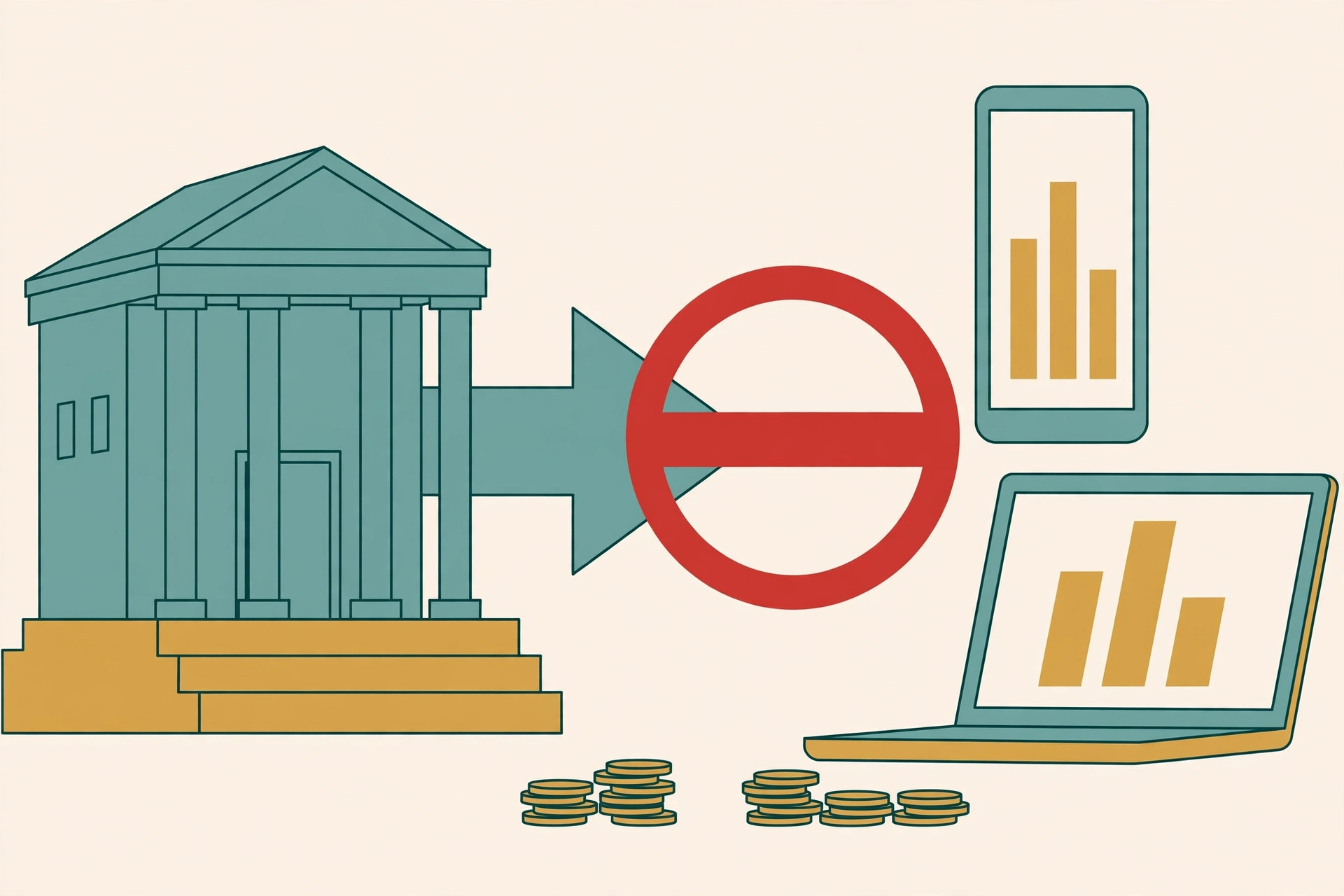
On 6 November 2026, the United States Treasury's Financial Crimes Enforcement Network, known as FinCEN, issued an order that will cut crypto exchange MEXC Global off from the US financial system. US financial institutions will no longer be able to send or receive funds to or from MEXC, and the ban takes effect 30 days after the order is published in the Federal Register. That step had still not happened on the morning of 7 November, so no calendar date for it to bite is fixed yet.
What happened
FinCEN issued the order as part of Operation Economic Outcast, a Treasury campaign against sanctions evasion through crypto. Made under section 9714(a) of the Combating Russian Money Laundering Act, it finds MEXC Global to be a financial institution operating outside the United States that is of primary money laundering concern in connection with Russian illicit finance, and it bars US financial institutions from any transmittal of funds from or to the exchange.
Treasury Secretary Scott Bessent put it bluntly: "Financial institutions cannot have it both ways: Either you support the Iranian regime, or you have access to the U.S. financial system."
MEXC Global was founded in 2018, is incorporated in Seychelles, and operates in more than 170 countries. Treasury says that as of September 2026 it processed more than $1 billion in daily transactions and held about $5 billion in reserves, which makes it one of the 20 largest crypto exchangers in the world, with trading in more than 50 currencies and access to more than 3,000 cryptocurrencies and tokenized assets.
Why FinCEN acted
Between May 2021 and May 2026, Treasury says, MEXC facilitated at least $16 billion in funds connected to sanctions evasion, cybercrime and other illicit activity, while FinCEN's order puts the total for the same period at $16.7 billion. The two numbers come from two different documents, and this piece keeps them separate.
Nearly $1.5 billion of that flow was linked to Russian sanctions evasion, including $232 million in direct transactions with entities sanctioned by the US, the EU and the UK. MEXC was still processing transactions with the sanctioned Russian exchange Garantex and its successor Grinex as recently as June 2026, more than four years after Garantex's April 2022 OFAC designation. The order also cites at least $26 million benefitting the OFAC-sanctioned A7 sanctions-evasion network and almost $200 million connected to the A7A5 stablecoin.
The Iranian side is just as stark. Over the same five years MEXC sent or received about $1 billion in direct transactions with more than 40 identified Iranian crypto exchangers, and about $22 million for the Central Bank of Iran and the Islamic Revolutionary Guard Corps and its Qods Force. Treasury also points to ransomware and scam payments and Russian and other darknet market activity.
MEXC says it maintains anti-money laundering and customer identification policies, and its terms prohibit use by people in Iran and North Korea, yet Treasury says severe deficiencies in those controls allowed the exchange to serve users in the prohibited jurisdictions anyway. Regulators elsewhere had already moved against it: the UK Financial Conduct Authority put MEXC Global Ltd on its warning list in March 2024, Hong Kong's Securities and Futures Commission warned the same month, and the Seychelles Financial Services Authority took enforcement action in May 2026. MEXC responded overnight on 7 November 2026, saying it had noted the order and its legal and compliance teams are reviewing it.
What the order does, and what it does not do
This is not a sanctions designation. MEXC was not added to OFAC's SDN list, no property is blocked, and the order does not tell users to move their balances. It binds US financial institutions, not users directly, and it expressly excludes any US-located branches, subsidiaries or offices, while naming affiliates in Seychelles, Estonia, Switzerland and the UK, plus formerly Singapore-registered entities and any successors.
The order has no cessation date, so it stays in force until FinCEN says otherwise, and violations may result in civil or criminal penalties. It does not change existing obligations under the Bank Secrecy Act or OFAC sanctions.
What it means in general terms
Once the order takes effect, the route between a US bank account and MEXC closes, since US banks, money transmitters and other covered institutions will not be able to send or receive funds to or from the exchange, whether in dollars or in crypto. That matters because MEXC is a large venue, and the dollar rails are how most people move money in and out of an exchange.
MEXC itself is not shut down by this order, and users outside the United States are not directly affected. Nobody has promised any transfer of user funds, and the order contains no instruction for users to withdraw anything.
What happens next
The first thing to watch is the Federal Register. Until the order is published there, the 30-day clock has not started, and the effective date cannot be fixed. FinCEN's own cover note says the document is pending placement on public display.
The second is whether MEXC responds. It has: overnight on 7 November it said the platform is operating normally, user assets are secure, it will take the allegations seriously, it plans constructive communication with FinCEN and other regulators, and it has launched an independent review of its anti-money laundering and sanctions controls.
Sources
- Operation Economic Outcast Severs MEXC Global's Access to the U.S. Financial System, US Department of the Treasury (read 7 November 2026)
- Operation Economic Outcast Severs MEXC Global's Access to the U.S. Financial System, FinCEN (read 7 November 2026)
- Imposition of Special Measure Prohibiting the Transmittal of Funds Involving MEXC Global, FinCEN (read 7 November 2026)
- FinCEN Cuts Off MEXC From U.S. Financial System Over Alleged $16B Illicit Flows, Bitcoin Magazine (read 7 November 2026)
- Treasury's Operation Economic Outcast Is Remaking the Sanctions Playbook, and Crypto Is the Main Target, TechReport (read 7 November 2026)
- MEXC Says Withdrawals Continue as FinCEN Orders US Financial Cutoff, The Defiant (read 7 November 2026)
- MEXC Global Ltd - https://www.mexc.com/, Financial Conduct Authority (read 7 November 2026)
An AI assistant helped write this article.
Keep reading
News
Binance to close accounts in France, Spain, Italy and Poland on 31 December 2026
Binance confirmed affected accounts in France, Spain, Italy and Poland will close on 31 December 2026, with a monthly fee on leftover balances from 29 November.
4 min read
News
Thailand: Bitget faces a 5 December block after the SEC files a criminal complaint
Thailand's Securities and Exchange Commission filed a criminal complaint against BG Limited, the operator of the Bitget exchange, on 5 November 2026, and said access to the platform will be blocked from 5 December 2026.
4 min read1 view

News
Mexico: Banxico cuts benchmark rate to 6.25% in surprise move
On 5 November 2026 Banxico cut Mexico's benchmark rate from 6.50% to 6.25%, a surprise move after three holds, and called it a one-time adjustment with an extended pause to follow.
4 min read3 views

News
United Kingdom: Bank of England lifts Bank Rate to 4% in first rise since August 2023
On 5 November 2026 the Bank of England raised Bank Rate from 3.75% to 4%, its first rise in over three years, as inflation reached 3.5% and is expected to climb towards 5%.
4 min read